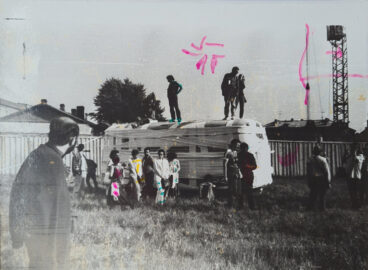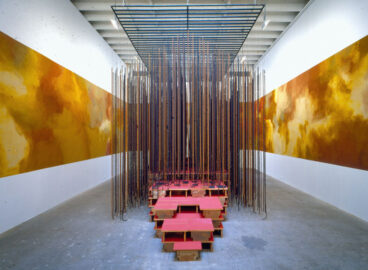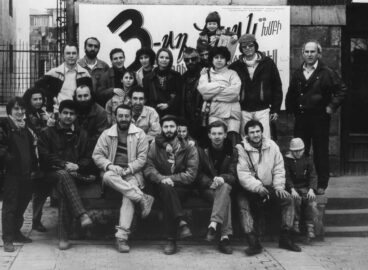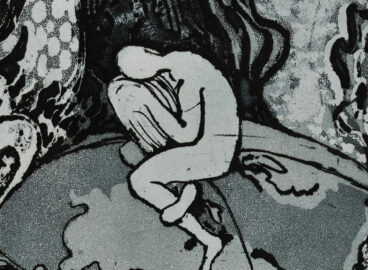
How can art disrupt and transform the status quo? How can art and the everyday be reconciled? What is the artistic significance of train rides, urinal cleaning, and fabricating fake banknotes? What is the sense of a musical performance that can be heard by no one but the performers? What is the purpose of art without permanence? These are some of the pressing questions that William Marotti, Associate Professor of History at UCLA, tackles in his presentation on the politics of “action” in early 1960s avant-garde art practice in Japan. Marotti characterizes that time and place as marked by public displays of growing dissatisfaction with the state. Yet, those energies of dissent melted away as increased wealth and prosperity obscured the major political issues at stake. One of the most critical of these was Japan’s continuing dependence on the U.S. long after the Allied occupation (1945–1952). Through its association with the U.S., Japan was intimately linked to the wars in Korea and Vietnam. Cooperation with the U.S. war interests was a particularly charged legal, economic, and...
Show More
Conceptualizing the Politics of Action, objets, and Failure - 1
Conceptualizing the Politics of Action, objets, and Failure - 2
Conceptualizing the Politics of Action, objets, and Failure - 3
Conceptualizing the Politics of Action, objets, and Failure - 4
Conceptualizing the Politics of Action, objets, and Failure - 5
Conceptualizing the Politics of Action, objets, and Failure - 6